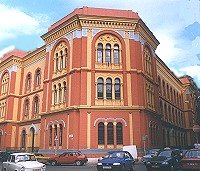
Robbanások Irán bejrúti nagykövetségénél – halottak
Egyelőre nem világos, hogy a robbanások a nagykövetség területén vagy azon kívül történtek, valamint hogy mi okozta őket: pokolgép robbant vagy esetleg rakéták csapódtak be. Halottak is vannak.
Qaeda-affiliated group claims Beirut blast
Sunni Sheikh Sirajeddine Zuraiqat, affiliated with radical global jihad organizations in Lebanon, tweets: ‘Abdullah Azzam Brigades – the Hussein bin Ali cells – are behind the attack on the Iranian embassy in Beirut.’ At least 23 people, including Iranian cultural attaché, killed in bombings
www.ynetnews.com/articles/0,7340,L-4455447,00.html
Két robbanás történt kedden Irán bejrúti nagykövetségénél, és ezeknek legalább öt halálos áldozata van – jelentették hírügynökségek.
Egyelőre nem világos, hogy a robbanások a nagykövetség területén vagy azon kívül történtek, valamint hogy mi okozta őket: pokolgép robbant vagy esetleg rakéták csapódtak be.

A helyszínről küldött tévés tudósítások felvételein összeégett emberek látszanak a földön, valamint megrongálódott járművek és épületek.
| 23 killed in attack on Iran’s embassy in Beirut |
Two suicide bombings strike near the Iranian Embassy in the Lebanese capital, killing 23 people, including the Iranian cultural attache • Al-Qaida-affiliated Abdallah Azzam Brigades claimed responsibility • Hanegbi: Israel not involved.
|
The scene of Tuesday’s attack in Beirut, Lebanon
|
Photo credit: AP
|

Two suicide bombings struck near the Iranian Embassy in the Lebanese capital of Beirut on Tuesday, killing 23 people, including the Iranian cultural attache.
The mid-morning blasts hit Beirut’s upscale neighborhood of Janah, a stronghold of the Iranian-backed Shiite Muslim Hezbollah group. One explosion blew out the large black main gate of the Iranian mission, damaging the three-story facility.
It was not immediately clear if the attack was related to the conflict next door in Syria, but attacks have targeted Hezbollah strongholds in recent months in what many see as retaliation by Sunni extremists for the militant Shiite group’s role in the Syrian civil war. The al-Qaida-affiliated Abdallah Azzam Brigades claimed responsibility for the attack, vowing more attacks until Hezbollah quits its support for the Assad regime. Likud MK Tzachi Hanegbi told public radio on Tuesday afternoon that Israel was not involved in the attack.
Hezbollah fighters have been fighting alongside Syrian President Bashar Assad’s forces against largely Sunni rebels seeking to topple his government.
Iranian Ambassador Ghazanfar Roknabadi identified the dead diplomat as Sheikh Ibrahim Ansari. Speaking to Hezbollah’s Al-Manar TV, he said Ansari took his post in Lebanon a month ago and was overseeing all regional cultural activities.
Lebanese Health Minister Ali Hassan Khalil said 23 people were killed and 146 wounded in the blasts.
Debris was scattered on the street and cars were on fire as people ran away from the chaotic scene. The second blast was meters away from the embassy building.
AP video showed firefighters extinguishing flames from vehicles, blood-spattered streets and bodies covered with sheets on the ground. A charred motorcycle stood outside the embassy gate.
An armed guard at the embassy told AP that the first blast was believed to have been carried out by a suicide attacker who rode a motorcycle and blew himself up outside the gate. The guard, speaking on condition of anonymity because he was not authorized to talk to media, said the other explosion, which caused much more damage, was likely a car bomb.
Lebanese security officials confirmed the two bombings were both suicide attacks. They spoke on condition of anonymity in line with regulations.
„We tell those who carried out the attack, you will not be able to break us,” Hezbollah lawmaker Ali Mikdad told Al-Mayadeen TV. „We got the message and we know who sent it and we know how to retaliate.”
Hezbollah’s Al-Rasoul al-Azam hospital called on people to donate blood, saying they need all blood types.
Iran has been one of Assad’s strongest supporters, supplying him with money and weapons since the Syrian crisis began in March 2011.
An Aug. 15, a car bombing in a Shiite stronghold of Hezbollah in the southern suburbs of Beirut killed 27 people and wounded more than 300. A less powerful car bomb targeted the same area on July 9, wounding more than 50 people.